Healing the Brokenhearted: A Biblical Approach to Inner Freedom
By Ami Smith
We live in a fallen world where emotional wounds, trauma, and lingering pain can quietly anchor themselves deep within our souls. In many Christian circles, the phrase “inner healing” is met with immediate enthusiasm, while in others, it is viewed with deep skepticism.
Is inner healing a biblical gateway to freedom, or is it a psychological trend dressed up in spiritual language? The truth is, when rooted firmly in the narrative of Scripture without taking verses out of context, inner healing is a profoundly biblical process of sanctification, mind renewal, and emotional restoration.
Understanding Inner Healing Biblically
At its core, biblical inner healing is the process where the Holy Spirit repairs a wounded soul (the mind, will, and emotions). It is the application of the gospel to our past traumas, deep-seated rejections, and false belief systems.
Too often, well-meaning Christians use a “proof-texting” approach to mental health, ripping single verses out of context to minimize real pain. For example, Philippians 4:13 (“I can do all things through him who strengthens me”) is frequently misused as a quick fix to bury depression, even though Paul wrote it in the context of enduring physical hardship and contentment.
True biblical inner healing doesn’t offer a superficial spiritual band-aid. Instead, it mirrors Psalm 147:3, where the Psalmist declares: “He heals the brokenhearted and binds up their wounds.” In the ancient Hebrew context, binding a wound was a hands-on, intentional, and often slow process of cleansing and pressure. God does not expect us to pretend our wounds do not exist; He invites us to bring them to Him.
The Pros and Cons of Inner Healing
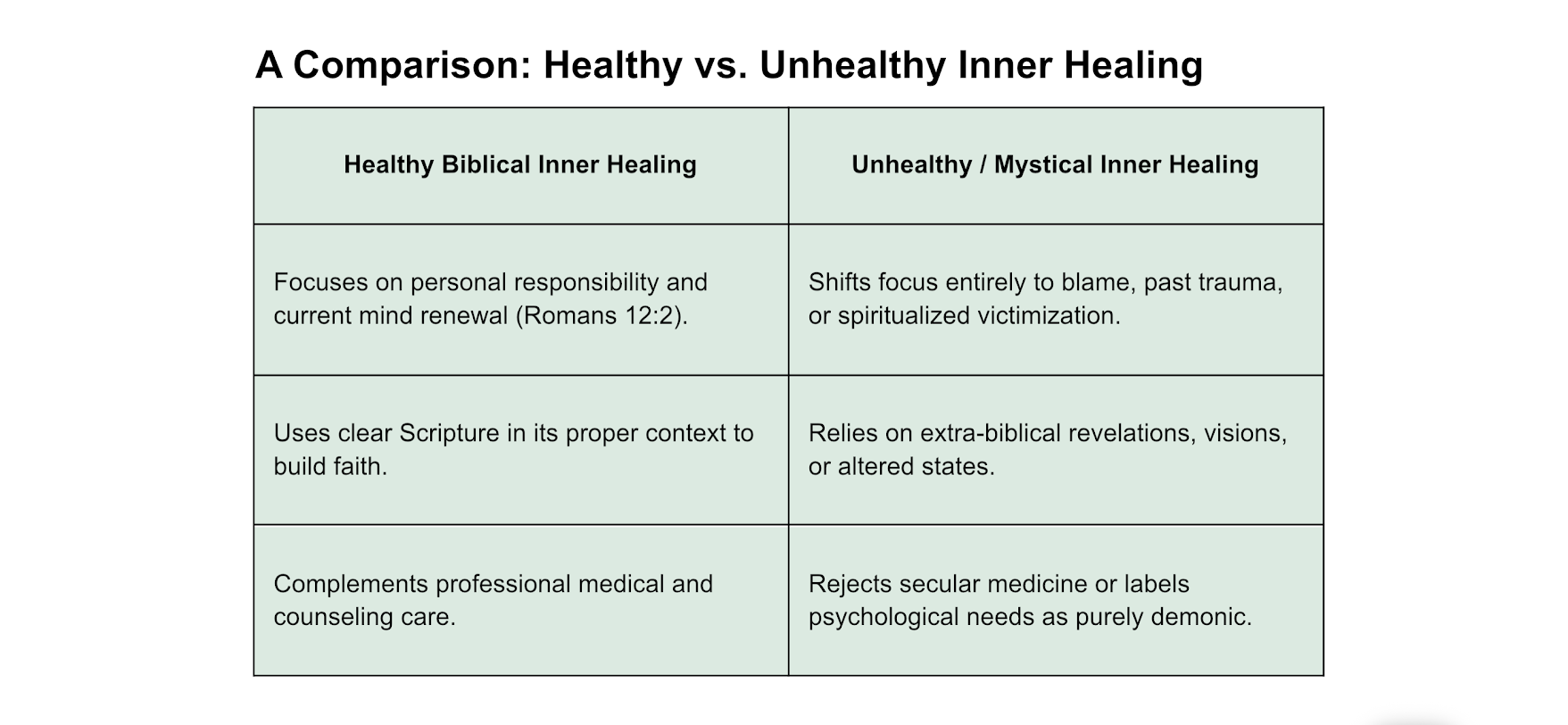
To pursue emotional freedom safely, we must discern the healthy biblical framework from the unhelpful extremes found in modern ministry landscapes.
The Pros (The Biblical Benefits)
True Renewal of the Mind: Wounds breed lies like “I am unlovable” or “God has abandoned me”. True inner healing aligns with Romans 12:2, replacing toxic, subconscious narratives with the objective truth of Scripture.
Bridges the Gap to Forgiveness: Many believers struggle to forgive because their emotional pain is so raw. Processing that trauma under the guidance of the Holy Spirit provides the grace needed to obey Christ’s command to forgive.
Integrates Soul and Spirit: It honors how God built us. We are not just spiritual beings; we have minds and bodies. Inner healing acknowledges that a wounded soul can disrupt our walking out the Christian life.
The Cons (The Unhealthy Pitfalls)
The Danger of Hyper-Focusing on the Past: Some modern inner-healing models keep believers continuously digging into their past or generational curses, ignoring the definitive victory of the cross.
Unbiblical Techniques: Practices like using “guided visualization” to treat Jesus as a spirit guide to alter memories find their roots more in New Age mysticism than the Bible.
Neglecting Physical & Professional Care: Some ministries hyper-spiritualize everything, discouraging people from seeking professional clinical counseling or necessary medical treatment, which God frequently uses as tools for healing.
The Road to Freedom: How to Practice Biblical Inner Healing
If you want to walk out this journey of emotional restoration in a healthy, grounded way, consider these foundational steps:
Practice Honest Lamentation
Stop hiding the pain. The Psalms are filled with raw, messy emotions. Bring your actual anger, grief, and confusion directly to God. He cannot heal what you refuse to reveal.
Take Every Thought Captive
Paul instructs us in 2 Corinthians 10:5 to “take every thought captive to obey Christ.” When an anxious or wounding thought arises, hold it up to the mirror of God’s whole Word—not isolated proof-texts.
Expose the Root Lies
Ask the Holy Spirit to reveal if your current behaviors (like people-pleasing, toxic anger, or fear) are tied to a lie you believed during a past hurt. Replace that specific lie with the overarching biblical truth of your identity in Christ.
Walk in Community
Healing does not happen in isolation. James 5:16 connects our healing to confessing our struggles to one another and praying for each other. Seek out a mature believer, pastor, or biblically grounded Christian counselor.
True inner healing isn’t about rewriting your past or finding a magical spiritual shortcut. It is the steady, everyday process of letting the Holy Spirit reshape your mind, heal your broken heart, and lead you into the lasting freedom Christ already purchased for you.